

Oops! Something went wrong while submitting the form.
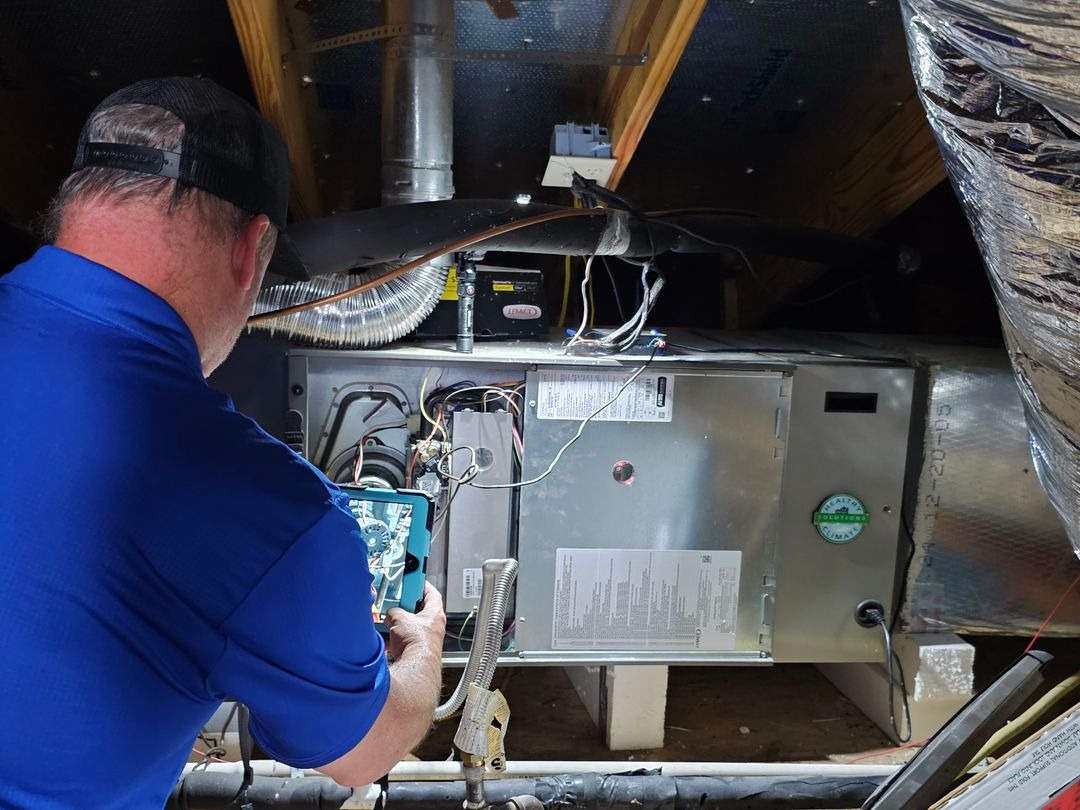
During summer, an air conditioner must run longer to maintain indoor comfort. This demand can reveal declining capacity, worn components, and efficiency problems that were less noticeable during milder weather.
Age alone does not determine when to replace your air conditioner. Replacement becomes more practical when an older system also has poor cooling, repeated repairs, rising electricity use, or a major component problem.
Age alone does not mean an air conditioner must be replaced. However, older systems may become less efficient, require more frequent repairs, and struggle to maintain consistent indoor comfort.
Review:
A well-maintained older system may continue operating reliably. Replacement becomes more practical when age is combined with recurring repairs, uneven cooling, rising energy use, or declining performance.
A single repair does not usually justify replacing an air conditioner. The greater concern is a pattern of recurring service calls, repeated failures, or multiple aging components requiring attention within a short period.
Consider:
A minor repair may still be worthwhile when the system has otherwise performed reliably. However, when breakdowns become more frequent, Schedule a professional AC system evaluation with Kinsey Plumbing, Heating & Air. A technician can diagnose the current problem and help you compare the value of another repair with the potential long-term benefits of replacement.
Hot weather naturally increases air-conditioning use. A replacement decision should not be based only on a higher bill because electricity rates, household activity, thermostat settings, and outdoor conditions also affect cost.
Compare:
Rising consumption becomes more concerning when the AC runs longer, struggles to reach the thermostat setting, or provides less comfort. Frequent repairs combined with higher energy use may indicate that replacement should be evaluated.
Extreme heat can cause an air conditioner to run for longer periods. However, the system should still be able to maintain a comfortable indoor temperature. A struggling AC may run continuously while the home remains warmer than the thermostat setting.
Before considering replacement:
If these basic checks and routine maintenance do not improve performance, the system may have an airflow problem, refrigerant issue, electrical fault, or reduced cooling capacity. Schedule a professional AC evaluation before deciding whether repair or replacement is the better option.
An air conditioner may continue running while failing to provide consistent comfort. Persistent hot rooms, high indoor humidity, or slow temperature recovery can indicate that the equipment is no longer meeting the home’s needs.
Document:
Not every comfort problem requires replacement. Duct leakage, insulation, sun exposure, airflow balancing, or system design may be responsible. Replacement becomes more practical when these conditions have been evaluated and cooling remains unreliable.
The question is not simply whether an air conditioner can be repaired. Homeowners should consider how much reliable service the repair is likely to provide and whether other expensive problems may follow.
Ask about:
A costly repair may make sense for a newer system in otherwise good condition. The same repair may offer limited value on older equipment with previous failures. Age, condition, repair history, operating cost, comfort, and expected reliability should be considered together.
An aging air conditioner may operate during milder conditions but become unreliable during the hottest hours. Intermittent startup, unexpected shutdowns, or repeated failures to restart can indicate that components are struggling under sustained demand.
Watch for:
Do not repeatedly reset a breaker or restart equipment that immediately shuts down. Turn the system off if you notice burning odors, smoke, sparks, or repeated breaker trips, and request professional diagnosis.
Waiting until an air conditioner completely fails during summer can leave homeowners with less time to compare systems, review installation requirements, and make an informed decision. Planning ahead provides an opportunity to discuss:
Efficiency ratings are important, but they are only one part of selecting a new air conditioner. Proper system sizing, effective ductwork, and professional installation also influence indoor comfort, energy use, and long-term performance.
An oversized system may cool the home quickly but shut off before adequately controlling indoor humidity. Frequent starting and stopping may also increase wear on system components.
Repair may remain the better option when the air conditioner is relatively new, the problem is isolated, replacement parts are available, and the system previously operated reliably.
Replacement becomes more practical when several concerns occur together, such as an aging system, recurring repairs, declining comfort, increasing energy use, unreliable operation, or a major component failure.
These factors should be considered together rather than treated as automatic replacement rules. Schedule a professional HVAC evaluation with Kinsey Plumbing, Heating & Air to understand the available options and determine whether another repair or a system replacement provides better long-term value.
An air conditioner does not automatically require replacement after 10 years. A properly maintained system may continue operating reliably, but age should carry more weight when repairs become frequent, efficiency declines, comfort becomes inconsistent, or major components begin to fail.
Replacing an air conditioner during summer may be necessary when cooling becomes unreliable or the system fails completely. Planning before an emergency provides more time to compare equipment, confirm proper sizing, review efficiency ratings, and understand installation requirements.
A newer, higher-efficiency system may reduce cooling-related energy use, but lower bills are not guaranteed. Actual results depend on equipment sizing, installation quality, duct condition, thermostat settings, insulation, weather, household habits, and electricity rates.
A refrigerant leak does not automatically mean the complete system must be replaced. The decision depends on the leak location, repair cost, equipment age, refrigerant type, warranty coverage, overall condition, and whether other major components are deteriorating.
Before installation, the contractor should evaluate the home’s cooling load, ductwork, airflow, insulation, electrical requirements, thermostat compatibility, and equipment location. The new system should be sized for the home rather than selected only by matching the old unit.
Summer heat does not prove that an air conditioner needs replacement, but it can expose performance problems that make continued repairs less practical. The strongest replacement case combines age, recurring failures, poor comfort, rising energy use, unreliable operation, and a costly repair need.
If your system is struggling to maintain reliable cooling, Schedule an evaluation with Kinsey Plumbing, Heating & Air. A technician can assess its condition, explain whether another repair remains reasonable, and determine whether air conditioner replacement is the more practical long-term option.